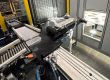

The automation of parts inspection is one of the most significant decisions in the evolution of automotive quality control. However, it is not always the right answer, nor at any point in the production cycle.
Automating due to competitive pressure or technological trends often leads to oversized or poorly integrated solutions. The question is not whether automation is good or bad, but when it truly provides stability, efficiency, and analytical capability to the verification process.
When Variability Begins to Affect Results
One of the first indicators that automation may be necessary is the loss of consistency in quality control. When results vary between shifts or depend excessively on individual experience, the process ceases to be fully repeatable.
In automotive environments, where standards are demanding and tolerance margins are tight, this variability introduces an operational risk that is not always visible in the short term, but ultimately affects system stability.
Automation, when properly implemented, allows for the application of constant and measurable criteria, eliminating dependence on subjective judgment in repetitive tasks.
When Volume Grows but the Structure Cannot
Another common scenario is sustained production growth without the real possibility of expanding human resources at the same rate. In these cases, manual inspection becomes a bottleneck.
Automation allows volume growth to be decoupled from operational cost growth. But this only works when the solution is specifically designed for the pace, model variability, and architecture of the existing line.
Therefore, before implementing any system, it is essential to analyze the process in depth: defect types, cycle times, operator interaction, and data recording requirements. Automating without this prior analysis usually transfers the problem rather than solving it.
When Data Becomes More Important Than Inspection
In many industrial processes, the real value no longer lies solely in detecting a defect, but in understanding why it occurs and how to anticipate it.
If the current system does not allow for structured results recording or trend analysis, continuous improvement becomes limited. Automation makes sense when integrated within a digitalization strategy that transforms each inspection into useful information for quality, production, and engineering.
Automation Is Not Replacement, It Is Structuring
Automating parts inspection should not be understood as eliminating the human factor, but as structuring the process. People remain essential in complex decision-making, but repetitive and highly objective tasks can be managed with greater stability through automated systems.
The difference lies in the approach: implementing isolated technology or designing a solution integrated into the overall quality control strategy. If you would like us to analyze your process, contact us.